CASE STUDY

Healthcare Technology: Verisurg Platform

Verisurg

Healthcare/Medical Technology

Surgery Management Platform for Clinics and ASCs

Overview

The Verisurg platform exemplifies the transformative potential of healthcare technology by addressing inefficiencies and streamlining operations across clinics and ambulatory surgery centers (ASCs). This case study highlights how Verisurg modernized their surgical management platform to overcome critical operational challenges, improve patient care, and ensure secure and compliant data management.

The Challenge

The Verisurg team faced several critical challenges in modernizing their platform for surgery management, particularly in addressing inefficiencies and meeting evolving healthcare standards. Below is a detailed breakdown of the issues:

Complex Communication Between Clinics and ASCs:

Fragmented communication channels caused delays, data duplication, and coordination errors. This lack of integration hindered seamless updates and collaboration between stakeholders.

Manual Surgery Scheduling:

Labor-intensive scheduling processes led to overlapping or missed bookings, reduced efficiency, and limited scalability for managing higher surgical volumes.

Inefficient Inventory Management:

Manual tracking methods resulted in overstocking, shortages, and lack of predictive insights, disrupting surgery readiness and increasing operational costs.

Paper-Based Consent Forms:

Managing patient consents on paper was time-consuming, error-prone, and insecure, complicating storage, retrieval, and compliance with data protection regulations.

Limited Real-Time Operational Visibility:

Absence of real-time tracking tools made it challenging to monitor patient flow, surgery progress, and OR availability, leading to inefficiencies and delays in decision-making.

Our Solution

The Verisurg platform was designed and deployed to tackle these challenges with robust, scalable components and innovative features:

Surgery Management System:

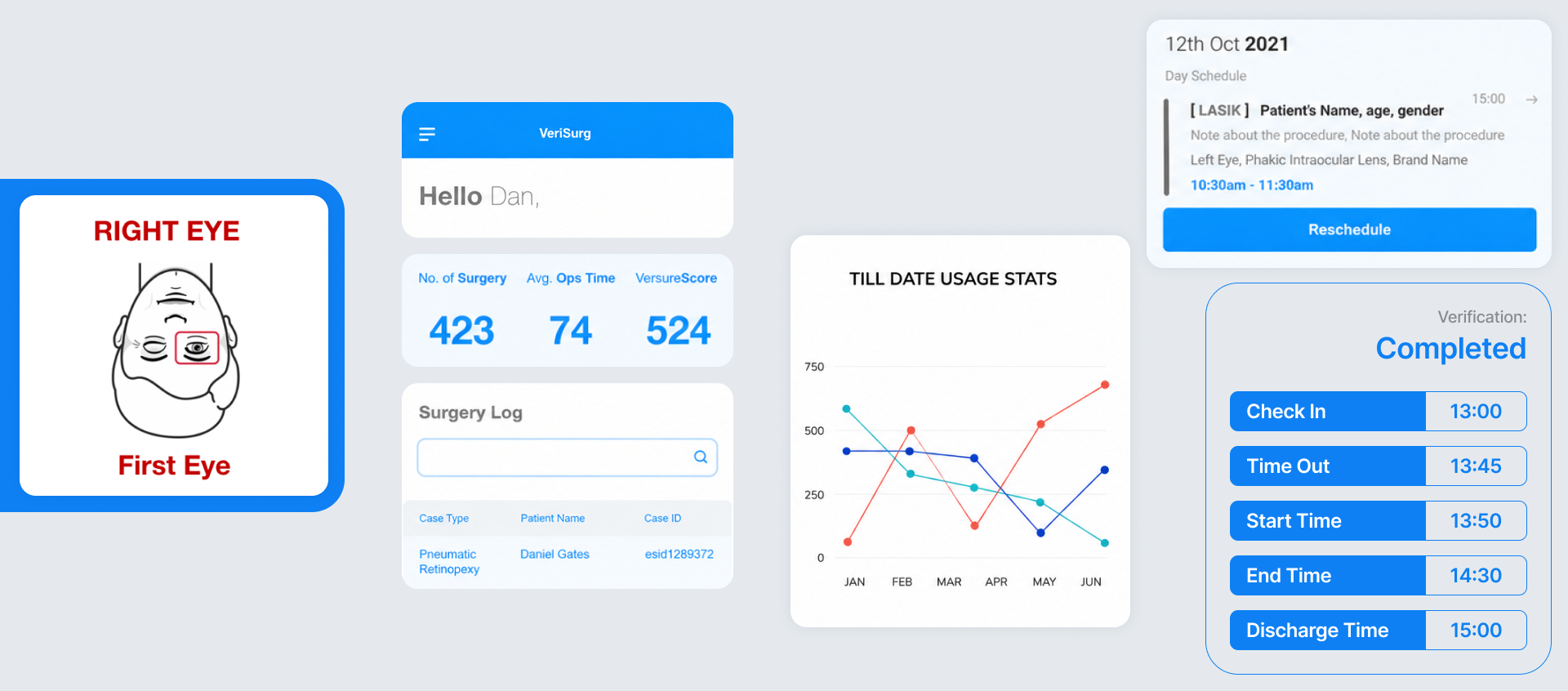
Developed a role-based web application to streamline patient registration, surgery scheduling, digital consent management, and automated workflows for clinics and ASCs.

Inventory Management System:

Integrated real-time inventory tracking, enabling predictive ordering, usage analytics, and automated reordering to ensure readiness and cost efficiency.

Real-Time Operational Visibility:

Implemented tools for OR time tracking, patient flow monitoring, and real-time status updates, improving coordination and reducing delays.

Security and Compliance Framework:

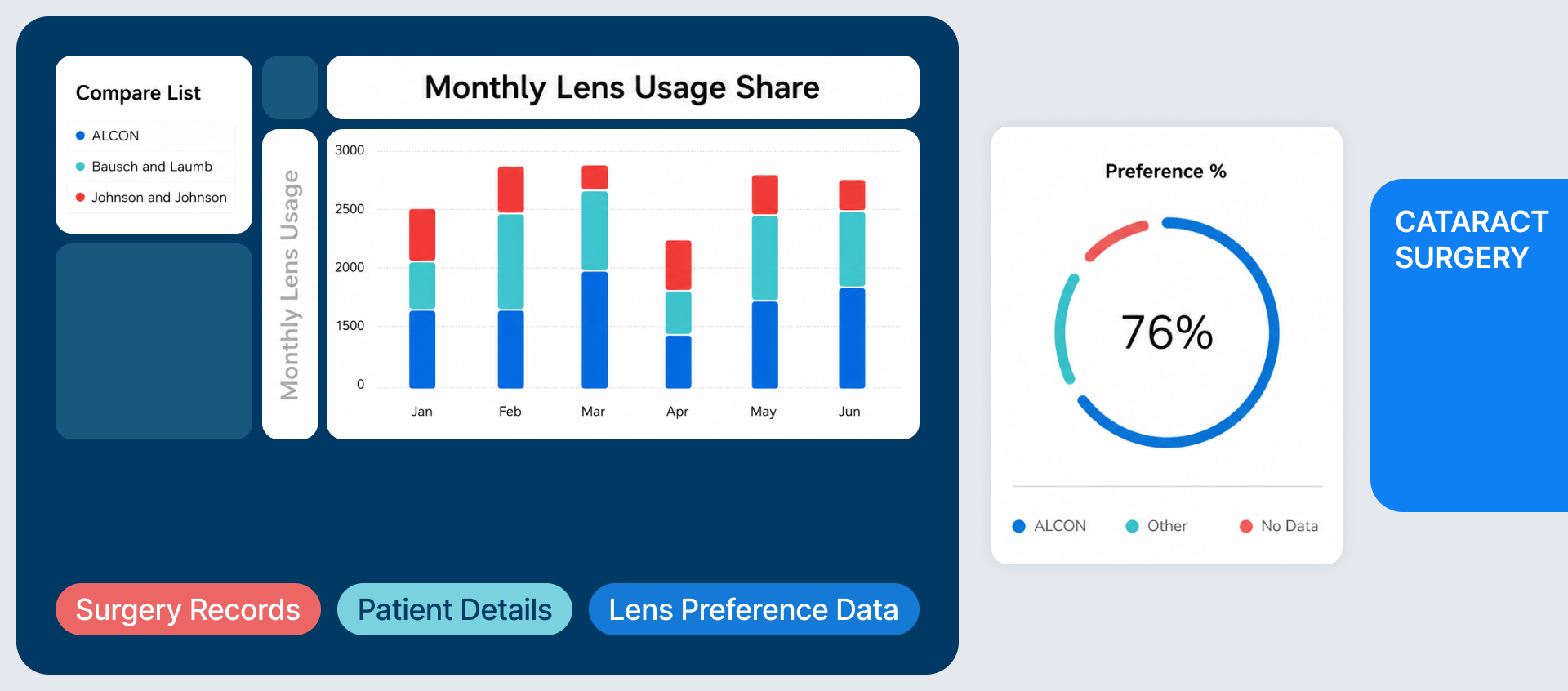
Ensured HIPAA compliance with secure data handling, role-based access controls, audit trails, and encrypted transmission to protect sensitive patient information.
Key Features

For Clinics

Simplified patient registration, digital consents, and surgery scheduling.

For Surgery Centers

Enhanced OR scheduling, inventory management, and patient tracking.

For Physicians

Streamlined preferences, digital documentation, and performance analytics.

Verisurg Platform

Results & Benefits

Operational Improvements

  • Enhanced scheduling efficiency
  • Reduced administrative overhead
  • Optimized inventory management
  • Better patient tracking and resource utilization

Clinical Impact

  • Improved patient care quality
  • Reduced errors in processes
  • Strengthened communication between stakeholders

Business Benefits

  • Significant cost reductions
  • Greater operational efficiency
  • Data-driven insights for strategic decisions

Conclusion

The Verisurg platform showcases how a well-designed, comprehensive healthcare management system can overcome operational bottlenecks while maintaining stringent security and compliance standards. This project not only optimized surgical workflows but also delivered measurable improvements in efficiency, cost savings, and patient care quality.

Quick Answers

Verisurg is a browser-based surgery management platform that Notionmind designed and built for clinics and ambulatory surgery centers (ASCs). It brings patient registration, OR scheduling, digital consent forms, and real-time surgical inventory tracking into one role-based system, so clinic staff, surgery center teams, and physicians each work from views built for their job. The platform replaced paper consents and disconnected scheduling tools that were causing booking conflicts and inventory errors. Verisurg was later acquired by a major medical device company, which speaks to the commercial strength of the product Notionmind helped build.
Most ASCs run scheduling, inventory, and patient intake on separate tools, often with paper in between. That fragmentation causes double-booked ORs, missed cases, supply shortages discovered the morning of surgery, and consent forms that are slow to retrieve during an audit. Before the platform, Verisurg's clinic network dealt with all of these: manual scheduling limited case volume, inventory tracking couldn't predict usage, and staff had no live view of patient flow or OR availability. These are the operational patterns Notionmind sees across surgical groups, and they compound as a center adds cases or locations.
Compliance was built into the architecture rather than added at the end. The platform encrypts patient data in transit and at rest, restricts every screen and record through role-based access controls, and keeps complete audit trails of who touched what and when. Paper consent forms moved to encrypted digital workflows, which closed the storage and retrieval risks that come with physical documents. Notionmind designs healthcare systems this way as standard practice: the compliance requirements shape the data model from day one, so a clinic never has to retrofit security into a live system.
The platform runs on cloud infrastructure with a responsive web application that works equally well on a phone in a prep room or a desktop at the front desk. RESTful APIs connect the scheduling, inventory, and patient management modules and allow outside systems to exchange data with the platform. Role-based access control and HIPAA-grade encryption sit at the architecture layer, not the application layer, so every module inherits them. The stack was chosen for two things: reliability under daily clinical use, and room to add clinics without re-platforming.
Notionmind locked integration scope during discovery, before writing any code. The team mapped which existing systems held source-of-truth data, which ones the new platform would replace, and which ones it needed to connect to, including the device-vendor inventory systems used for usage prediction and automatic reordering. The platform was built API-first so those connections stayed stable as the clinic network grew. Notionmind delivered Verisurg as a build partner, and the client owned the product outright, which is part of why it could later be acquired. The same integration mapping opens every Notionmind healthcare engagement, and it is the step that prevents the data migration surprises that stall most healthcare software projects.
The platform increased OR utilization and cut administrative work across the clinic network. Digital consent and audit logging strengthened the compliance posture, scheduling conflicts dropped once bookings moved to one live system, and clinicians gained a real-time view of patient flow they never had on paper. Notionmind validated the ROI path through a proof of concept in a limited set of clinics before the full rollout, so results were measured on real cases before the network committed. The clearest external validation came later, when the platform was acquired by a major medical device company.
Off-the-shelf ASC software fits centers whose workflows match the vendor's template. It breaks down when a group runs multiple specialties, non-standard inventory arrangements, or vendor relationships the software wasn't designed around, which was Verisurg's situation. A custom platform costs more upfront and pays back through workflows that match how the center actually operates, plus ownership of the product and its data. Verisurg is the sharpest version of that payoff: the custom platform became an asset valuable enough to acquire. Notionmind will say plainly during discovery if an off-the-shelf tool is the better answer for a given group.
Notionmind starts with a discovery phase that locks scope, compliance requirements, and integration points before any code gets written. Development then runs in short cycles with weekly demos, and the first release goes live as a proof of concept in a limited environment, the same way Verisurg launched in a small set of clinics before expanding. That staged rollout protects data integrity and gives the client measurable results before a full commitment. Notionmind has been building healthcare and health tech systems since 2019, with work spanning surgical platforms, telemedicine backends, and HIPAA-compliant document automation. The next step for a surgical group is a scoped strategy call.

Ready to make a difference and write your next success story?

© 2026

Notionmind®, Knowtion, Inc.

All rights reserved.

, Privacy Policy, Terms of Use

Notionmind logo
